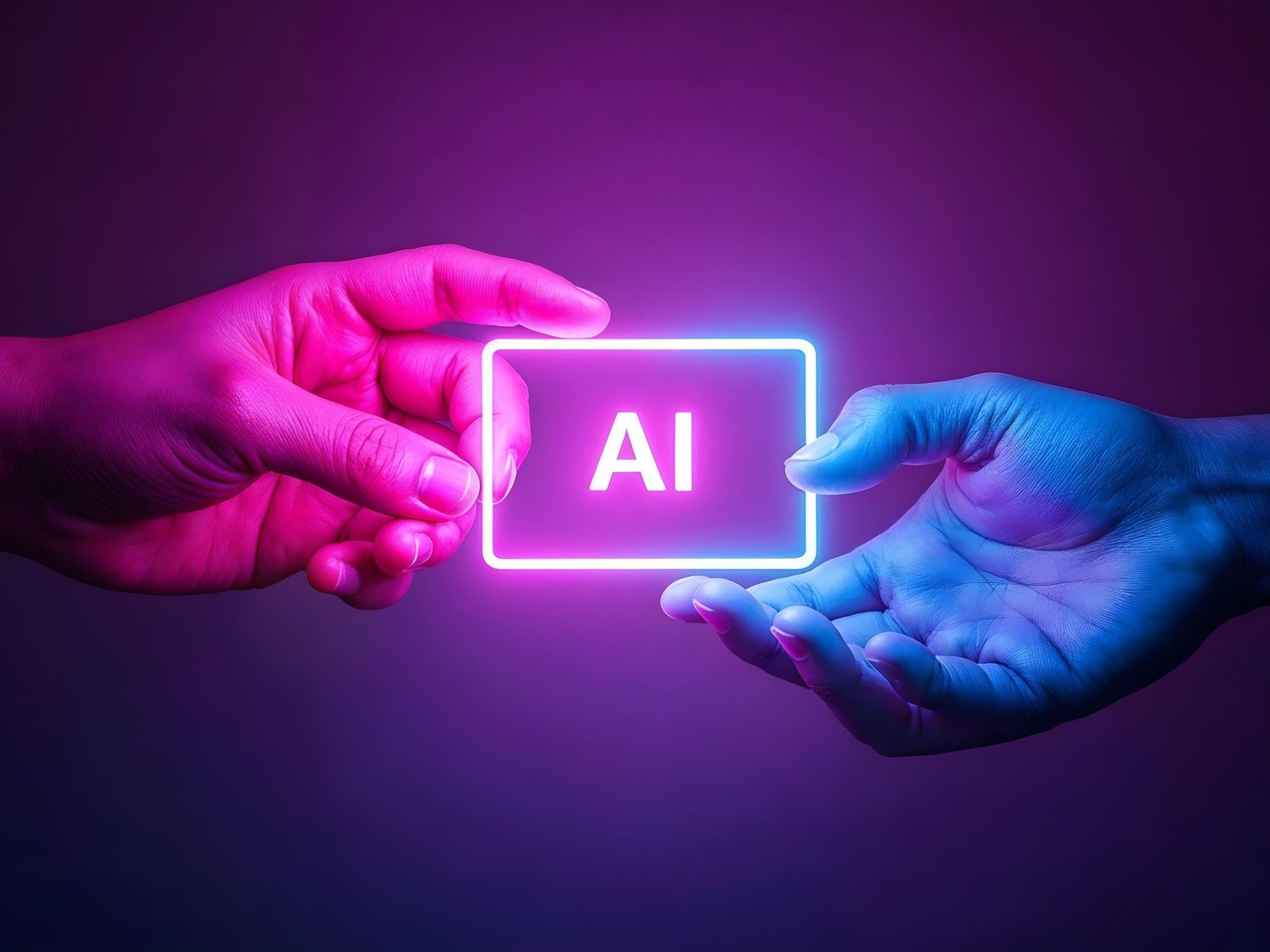
It’s 11 PM on a Sunday. You need a blog post for Monday morning. You open ChatGPT, type a prompt, and thirty seconds later, a 1,000-word article appears. It’s perfect, right? It’s free, it’s fast, and it looks professional.
But as you hit “Publish,” a nagging question remains: Is Google going to bury this on page ten? In 2025, the internet is being flooded with “average” AI content. The result? Search engines are becoming more aggressive than ever in rewarding content that feels—and actually is—human.
At Host Easy, we provide the platform for your voice. But whether that voice is yours or a machine’s matters more than you might think. Let’s settle the AI Content vs Human Content debate and show you how to survive the “Content Tsunami.”
The Google Stance: Does it Have to be Human?
Contrary to popular belief, Google does not ban AI content. Their official stance is that they reward high-quality content, however it is produced. However, there is a catch. Google uses a framework called E-E-A-T: Experience, Expertise, Authoritativeness, and Trustworthiness.
-
The AI Problem: AI has no “Experience.” It has never actually visited a cafe in Sydney, fixed a leaky pipe, or felt the stress of launching a business.
-
The Human Advantage: You have “Experience.” When you write about how you solved a problem for a client, you are providing data that an AI simply cannot fabricate.
AI Content vs Human Content: The Pros and Cons
| Feature | AI-Generated Content | Human-Written Content |
| Speed | Instantaneous. | Hours or days. |
| Cost | Pennies (or free). | High (time or freelancer fees). |
| Originality | Regurgitated data from 2023. | Fresh perspectives and new ideas. |
| Accuracy | Prone to “hallucinations” (fake facts). | Fact-checked and nuanced. |
| Connection | Often feels cold and “robotic.” | Builds empathy and brand loyalty. |
The “Hybrid” Strategy: How to Use AI Without Getting Burned
You don’t have to choose one or the other. The most successful websites in 2025 use AI-Assisted Human Content.
1. AI for Outlining: Use AI to brainstorm titles and structure your post. It’s great at “beating the blank page.”
2. The “Human Layer”: Once the AI gives you a draft, go in and add Personal Anecdotes. Mention a specific local Australian landmark, a conversation you had with a customer, or a mistake you made.
3. Fact-Check Everything: AI is a confident liar. Never publish a stat or a date provided by AI without verifying it first.
4. Inject Your Brand Voice: AI loves words like “delve,” “unlock,” and “comprehensive.” Humanise it by using your own slang, humour, and sentence structure.
Why Performance Hosting Matters for Content (AI or Human)
No matter who writes your content, if the page doesn’t load, no one will read it.
-
Handling the Volume: If you use AI to scale your content production, you’ll have more pages than ever. You need Host Easy’s high-performance NVMe storage to ensure your growing database remains lightning-fast.
-
SEO Signals: Since Google is looking closer at “User Signals” to determine quality, a slow-loading page will make users bounce, telling Google your content is low-value—even if a human wrote it!
-
Scalable Resources: As your content library grows and attracts more traffic, our hosting plans scale with you, ensuring zero downtime during your viral moments.
Authority Resources for the AI Era
-
Google Search Central: AI-Generated Content Guidance: The official rulebook for 2026.
-
Originality.ai: A tool to check how much of your content “sounds” like a machine.
Your Voice is Your Value
In an ocean of AI-generated noise, a human voice is a lighthouse. Use AI to work faster, but never let it replace the unique “Expertise” that only you can offer.
FAQS
Does Google penalise AI-generated content?
No. Google does not penalise content simply because it is generated by AI. Google’s guidelines focus on content quality, not how the content is created. AI-generated content can rank well if it demonstrates Experience, Expertise, Authoritativeness, and Trustworthiness (E-E-A-T). Low-quality, generic, or unhelpful AI content is what gets filtered out.
Can AI-written content rank on Google in 2025 and beyond?
Yes, AI-written content can rank — but only when it is edited, fact-checked, and enhanced by humans. Search engines increasingly reward content that includes real-world insights, original perspectives, and first-hand experience, which pure AI content cannot reliably provide on its own.
What is the biggest SEO risk of using AI content?
The biggest risk is publishing unedited, generic AI content that lacks originality, real experience, or accuracy. This type of content often leads to low engagement, high bounce rates, and weaker trust signals — all of which negatively impact SEO performance over time.
How does Google’s E-E-A-T framework affect AI content?
E-E-A-T places strong emphasis on Experience, which AI does not possess. AI can summarise information, but it cannot replace human insight, lived experience, or professional judgment. Content that clearly demonstrates real experience and expertise consistently outperforms purely AI-generated articles.
Is human-written content always better than AI content for SEO?
Not always — but human-led content almost always performs better long-term. The most effective strategy is a hybrid approach, where AI assists with research and structure while humans provide insights, examples, brand voice, and final editorial control.
How can businesses safely use AI for content marketing?
Businesses should use AI as a content assistant, not a replacement. Best practices include using AI for outlines, drafts, and idea generation, then layering in human expertise, fact-checking, original examples, and a consistent brand voice before publishing.
Can AI content hurt my brand credibility?
Yes, if it feels generic, inaccurate, or disconnected from real experience. Readers can increasingly recognise low-effort AI content, which can erode trust. Brands that combine AI efficiency with authentic human storytelling tend to build stronger authority and loyalty.
Does website performance affect how AI or human content ranks?
Absolutely. Regardless of who writes the content, page speed, uptime, and user experience are critical ranking factors. Slow-loading websites reduce engagement signals, which can negatively impact SEO even if the content itself is high quality.
What is the best content strategy for SEO in the AI era?
The strongest strategy is AI-assisted, human-led content supported by fast, reliable hosting. This approach allows businesses to scale content efficiently while still meeting Google’s quality, trust, and experience expectations.
Will AI replace human content creators?
No. AI will change how content is produced, but human creativity, judgment, and lived experience remain irreplaceable. In an AI-saturated internet, authentic human voices are becoming more valuable — not less.
How can I future-proof my content against AI search changes?
Focus on original insights, real experience, expert opinions, and strong technical foundations. Combining human expertise with AI tools and performance-optimised hosting ensures your content remains competitive as search engines evolve.